

What is CX?
Customer centricity (CX) can be defined as a business strategy that translates into a way of thinking and working, and a way of seeing the world.
As technology improves, products and services are easier to reproduce. CX has become an important strategy to differentiate in the market and improve customer lifetime value (the net profit associated with the future relationship with a customer).
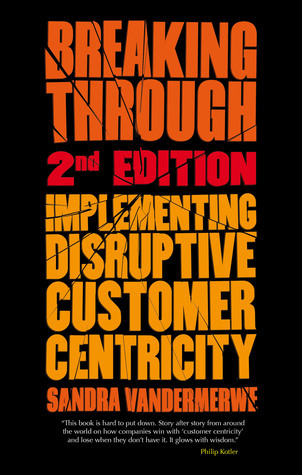
In her book, Breaking Through, Vandermerwe defines customer centricity as the “Ability to get and stay ahead, by giving long-term value to and getting long-term value from customers, in a way that makes it difficult for others to catch up.” (Vandermerwe, 2014: xvii)
The 3 different CX tracks
Organisations easily get stuck in a specific track or way of thinking and the risk is clear: competitors move in and eat your breakfast!
The customer centred philosophy distinguishes between 3 different tracks that an organisation can accelerate on.
Firstly: Industrial or product centred
Secondly: Customer centred
Thirdly: Social benefits
The first track
First track thinking is industrial. It is all about mass producing the same products for the same segments. In addition, it is a product centred approach designed to achieve short term goals.
Historically, most organisations have practiced first track thinking which has lead many brands to operate in the same spaces as products and services are easy to replicate.
Consequently, it has become impossible to operate on this track alone.
The second track
Second track thinking shifts the gears from product-focused to customer centred products and services and is all about personalisation. It’s about considering the customer’s experience pre, during and post their interaction with your brand.
According to Vandermerwe (2014: P58):
- Value is not what goes into a product or service
- Value is gained over time, not transactionally but at certain moments in time
Instead of focusing on short term goals only, second track thinking also takes a long-term view. Second track thinking moves away from segmentation towards broader market spaces that are inclusive to all customer segments. Designing for the customer experience (beyond just selling a product) leads to a better customer lifetime value.
Important questions to ask yourself when designing a new product or service:
- What is the critical activity customers go through to get the desired outcome?
- What are the value gaps?
- What are the opportunities for adding value? How can you fill gaps by adding value or removing waste? (Vandermerwe, 2014: P105)
The third track
The creation of new wealth as an outcome of CX design has the potential to solve new world problems.
Third track thinking is all about cause. It occurs when brands help individuals self-actualise and self-transcend.
In essence, third track thinking recognises that individuals are part of larger constituents like communities, cities and countries. The financial gains of customer centred products and services translate into social benefits when brands use it to do good.
In summary, on its third track, customer centricity has the power to change the world.
