


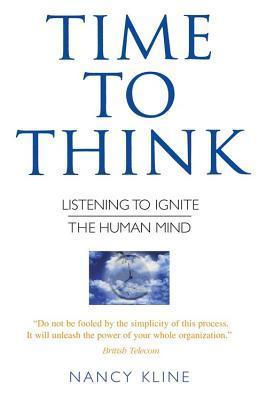
I was originally introduced to Time to Think (T2T) by an acquaintance who was trained by Nancy Kline in the UK. After this introduction, I read Nancy Kline’s book ‘Time to Think: Listening to Ignite the Mind’ (1999). To enhance my thinking and communication at work, I actively applied Time to Think principles in meeting rooms and workshops from 2018 to 2019, prior to the start of Covid-19.
While much of the world has moved to conducting meetings online, this doesn’t imply that the T2T principles can’t be applied to online communication, but they prove more effective in in-person interactions. Nonetheless, the T2T principles offer a robust approach for enhancing communication across all everyday interactions.
Roots of the Thinking Environment
Psychologically, Nancy’s work is rooted in Rogerian principles and the Person-Centred approach, promoting unconditional positive regard for others. Her approach also integrates cognitive behavioural elements, as it encourages learning new communication skills and continuous monitoring of behaviour in a transactional setting.
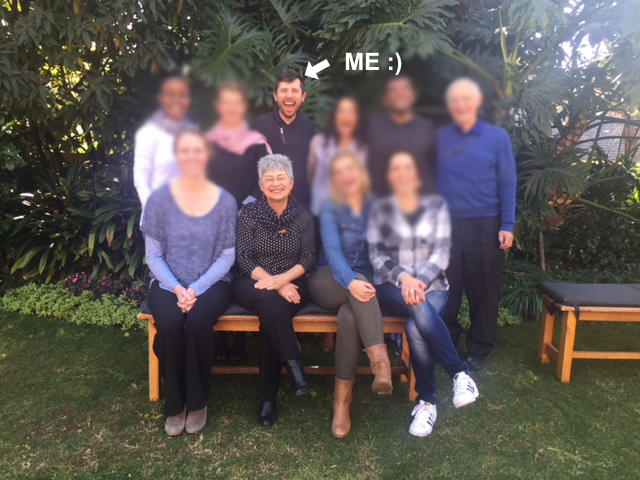
In 2018, Barak Learning and Development Consultants broadened the audience of their Thinking Environment courses. That same year, I attended the Time to Think Foundation course and obtained my official certificate. During the two-day Foundation Course, I gained firsthand experience with the Ten Components of a Thinking Environment. In a group of nine, including myself, I practiced Rounds and Continuous Rounds, Thinking Pairs, Dialogue, Open Discussion, and Crafting Questions. A brief summary of these concept follows.
Key take outs
The two most impactful tools from this approach are listening without interrupting to facilitate thinking and crafting Incisive Questions to overcome limiting beliefs.
First, the notion of listening without interrupting enables others to express their thoughts fully. All thoughts are received without judgment, including those considered ‘silly’ or ‘impractical,’ fostering enhanced thinking.
Second, posing incisive questions empowers thinkers to challenge limiting assumptions by presenting facts and formulating statements that help overcome obstacles created by limiting beliefs.
For further information, please contact Barak Learning and Development.
Here are some quotes I enjoyed from Time to Think: Listening to Ignite the Mind, by Nancy Kline (1999)
- “Everything we do depends for its quality on the thinking we do first.”
- “The quality of a person’s attention determines the quality of other people’s thinking.”
- “A Thinking Environment is the set of conditions under which people can think for themselves and think well together.”
- “People can’t think about something until they can talk about it first.”
The Ten Components of a Thinking Environment
Attention: Listening with respect and without interruption. When you don’t interrupt, a thinker is free to think for themself.
Equality: Treating each other as thinking peers, giving equal turns and attention and equality even in a hierarchy.
Ease: Ease creates and urgency destroys.
Appreciation: Genuine acknowledgement of a person’s qualities and practicing a 5:1 ratio of appreciation to criticism.
Encouragement: Encouraging others to move beyond internal competition.
Feelings: Allowing emotional release can restore thinking.
Information: Using facts allows you to facing what you have been denying.
Diversity: Not only inclusion of divergent thinking, but also diverse identities.
Incisive Questions: Removing assumptions that limit the ability to think for ourselves and creatively.
Place: Creating an environment that is psychological safe.
Applying the building blocks of a Thinking Environment
Creating a thinking pair
Anyone can create a thinking pair with another person. Here’s how:
- Settle back, keep your attention on your peer as they speak.
- Remember, your role is to help your peer think for themselves.
- Lastly, set a timer for 2 minutes or more. When time is up you can switch roles if needed.
Rounds and continuous rounds
Rounds apply to group meetings and workshops. Here’s how:
- Decide on an issue that the group needs to address.
- Determine the direction of the round.
- Ask for a volunteer to begin.
- Also apply the components of a Thinking Environment.
- For continuous rounds, continue answering the question in continuous rounds as long as thoughts keep coming.
- Additionally,i If needed a scribe can note all the comments.
Open discussion
As opposed to rounds which follow a specific structure and order, open discussions are popcorn style:
- Anyone speaks in no particular order.
- Keep interested in what each speaker will say next.
- Above all, avoid interruption.
